
东邪西毒
中国黄金协会发布严正声明_我的网站

A | 讯 8月19日,中国黄金协会发布严正声明:近期,美国国土安全部将国内部分黄金企业加入所谓“维吾尔强迫劳动预防法”(UFLPA)实体清单,禁止企业生产的商品进入美国;伦敦金银市场协会(LBMA)据此暂停相关企业合格交割资格。 A piece of cotton fabric, an AI supply-chain map, a "human rights" report and an electronics certification document appear to have little in common.
Behind them, however, are the US entities that have helped build and operate Washington's machinery of restrictions against China - tracing materials linked to Xinjiang region, mapping supply chains for enforcement, producing reports used to advance "forced labor" allegations, converting those allegations into corporate compliance pressure, and lobbying to exclude Chinese laboratories from the US market.
On August 5, China responded.
China's Ministry of Commerce announced the countermeasures against Applied DNA Sciences, Inc., Stratum Reservoir, LLC., Altana Technologies, Inc., Responsible Business Alliance, Verite Group, Inc. and Human Rights in China, the Xinhua News Agency reported.
These countermeasures, which took effect on Wednesday, were adopted in response to the US sanctions against Chinese companies under the pretext of "forced labor" in Northwest China's Xinjiang Uygur Autonomous Region, according to the ministry.
In a separate decision, Compliance Testing LLC was listed over its support for restrictive measures taken by the US Federal Communications Commission (FCC), according to Xinhua. Compliance Testing LLC assisted and supported the FCC in taking these measures, which endanger China's sovereignty, security and development interests.
Chinese organizations and individuals are prohibited from conducting relevant transactions or cooperation with these entities.
Public filings and company disclosures point to a more complicated picture: The seven US entities listed by China occupy different points along a chain extending from research and laboratory testing to AI-powered supply-chain mapping and compliance services, while some have changed their core business or retained operations linked to China.
Who are these entities, who pays them and what exactly have they done to Chinese companies? GT found more behind the names through an investigation into corporate filings, government contracts, funding records and public statements.
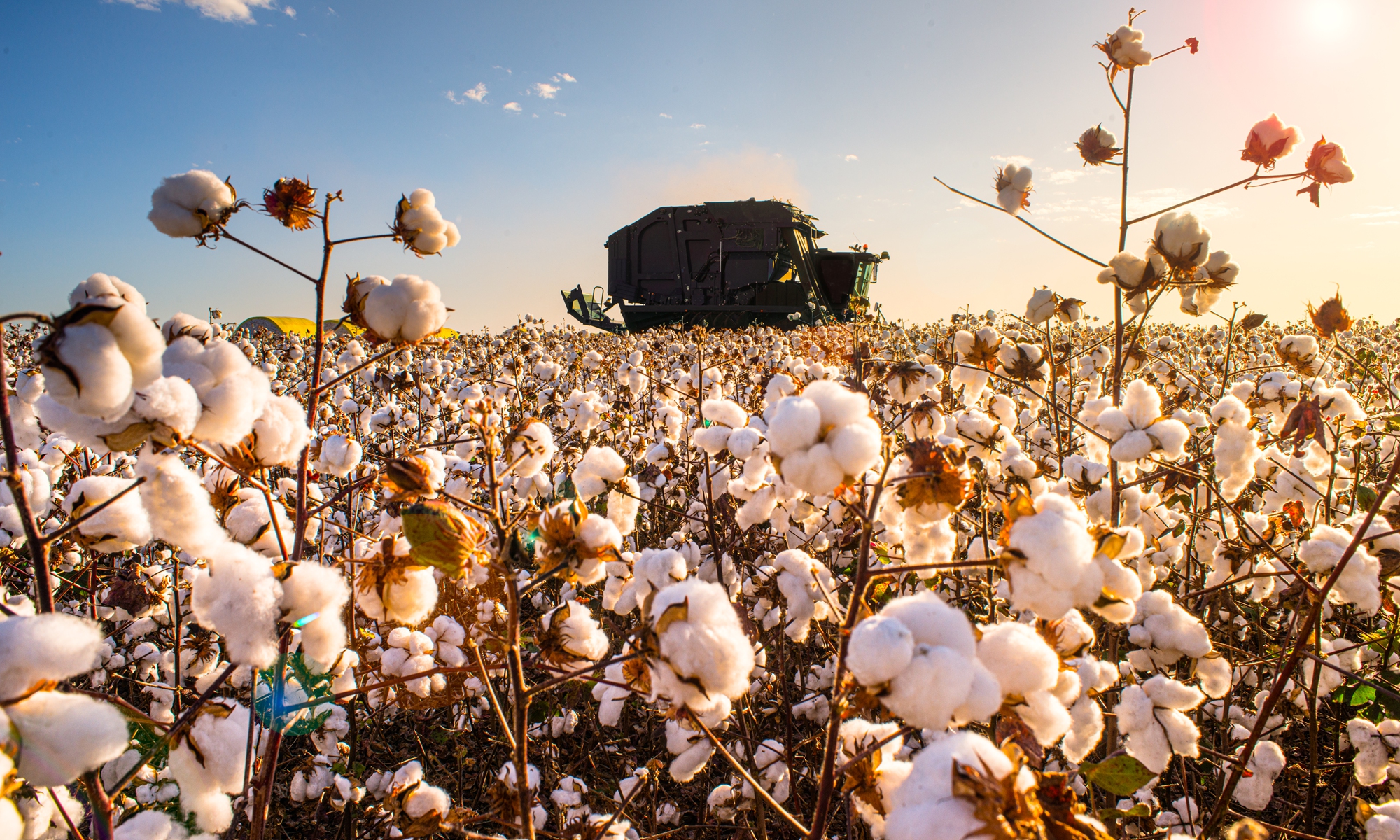
The path from the US government's Xinjiang-related allegations to enforcement actions runs through laboratory testing, supply-chain data and algorithmic screening. Three of the entities targeted by China's latest countermeasures have served as "hired guns" along that path.
Back to May 2024, Applied DNA Sciences and Stratum Reservoir drew international attention with a study of 822 cotton-containing products collected from major retailers and e-commerce platforms between February 2023 and March 2024. According to Reuters, 19 percent contained traces of cotton from Xinjiang region. Among the positive samples presented as having a single origin, 57 percent were labeled as containing only US cotton. The two companies declined to identify the retailers and brands involved.
But the test itself identifies a probable geographical origin: It does not examine recruitment, wages or conditions at a workplace. Those geographical findings acquire legal consequences through the US' prevention act on "forced labor" in Xinjiang, under which goods produced wholly or partly in Xinjiang face a rebuttable presumption.
According to an Applied DNA announcement republished by NASDAQ, the company received a subcontract from LRQA (Lloyd's Register Quality Assurance) in 2024 for an isotopic-testing pilot involving Pakistan's cotton sector. Under the subcontract, Applied DNA and its traceability partner Isotech, a Stratum Reservoir company, were to conduct isotopic testing and analysis. The pilot formed part of the US Department of Labor-funded Global Trace Protocol project, whose overall budget was $4 million.
By the time China announced its countermeasures, however, Applied DNA had undergone a striking corporate transformation. A May 2026 filing with the US Securities and Exchange Commission identifies the company as BNB Plus Corp, formerly Applied DNA Sciences, and describes it primarily as a digital-asset treasury company holding BNB cryptocurrency. The filing says it stopped providing textile isotopic-testing services during the previous fiscal year and was exiting its DNA tagging and security business.
The same filing recorded a net loss of $25.27 million for the six months ending March 31, 2026, as well as an accumulated deficit of $404.45 million.
Stratum Reservoir followed a different path into cotton traceability. The company was formerly the laboratory-services arm of oilfield-services group Weatherford. In 2019, Weatherford sold the business to an investor group led by CSL Capital for $206 million in cash, according to the Weatherford's website.
Stratum's own company profile still centers on reservoir characterization and laboratory analysis of rocks and fluids. Through Isotech, however, expertise developed for analyzing natural resources was extended to cotton-origin testing.
According to an Applied DNA announcement republished by NASDAQ, Applied DNA and Stratum Reservoir's Isotech division signed a memorandum of understanding in December 2021 to use isotopic analysis as a confirmatory test for determining cotton origin.
If Applied DNA and Stratum work from physical samples, Altana Technologies operates at the level of data networks.
In 2023, Altana announced that US Customs and Border Protection (CBP) had awarded it a multi-year contract to provide what the company called a "foundational map of the global supply chain." Its Atlas platform applies artificial intelligence to public, non-public and proprietary data.
According to Altana's announcement, thousands of Customs and Border Protection users would be able to conduct network analysis, screen value chains and compile evidence supporting enforcement actions.
That government relationship continued to expand. Records from the US government show that the US Department of Homeland Security (DHS) awarded Altana another contract in July 2026, with nearly $7.5 million obligated for a forced-labor tool and trade-compliance modules through June 2029.
Altana's personnel structure further reflects its focus on government enforcement. Its leadership page lists government affairs chief Scott Friedman as a former DHS assistant secretary for trade and economic security. Its advisory board includes a former CBP commissioner and several former customs, intelligence and national security officials.
Altana also markets compliance services to companies facing the same enforcement system. In joint promotional material, Altana and Kharon say CBP analysts use their platforms to enforce the US forced labor import ban framework, while businesses can screen shipments through the "exact lens" used by regulators - placing Altana on both the enforcement and corporate-compliance sides of the market.
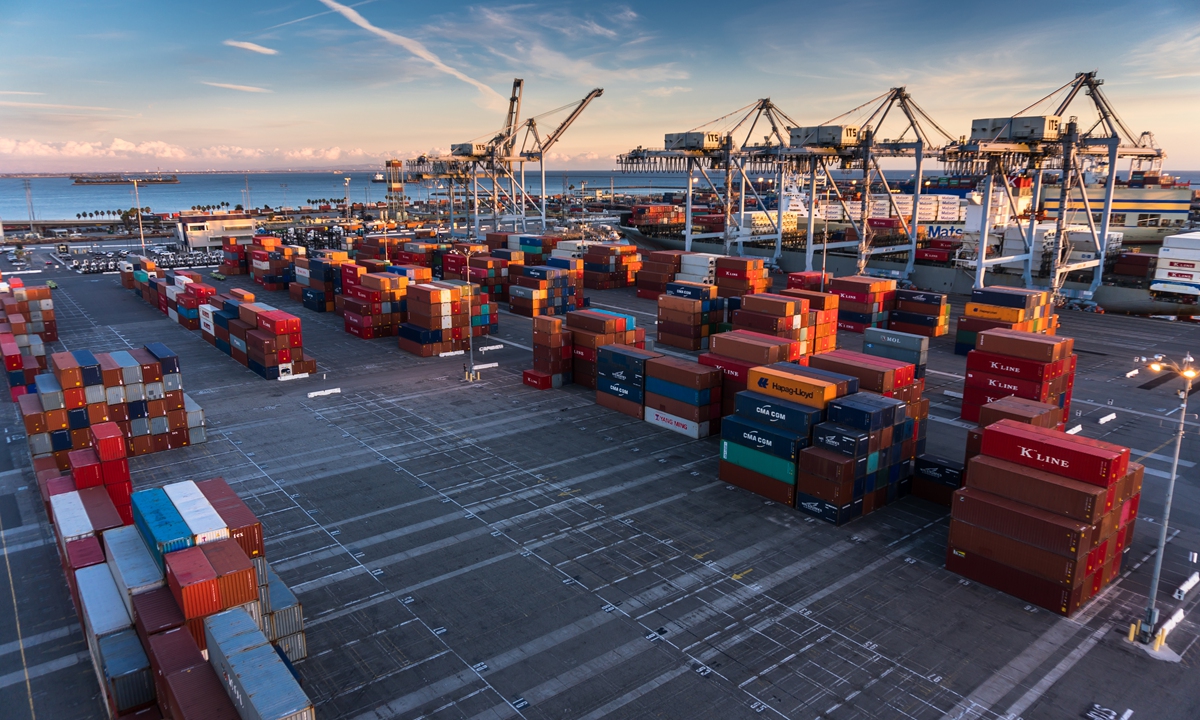
Together, the three companies illustrate how a technical chain can acquire enforcement power: A laboratory assigns a probable origin to a physical sample; a data platform connects companies, products and shipments across borders; government agencies use those findings to prioritize investigations or support enforcement.
Roles in a false narrative chain
"Repeat a lie often enough and it becomes the truth" is a maxim of propaganda often attributed to Nazi propagandist Joseph Goebbels. In the US' fabrication of the false narrative of "forced labor" in Xinjiang region and its effort to construct a complete chain of policies aimed at suppressing China, certain actors have repeatedly spread lies that smear China through softer means such as agenda-setting, report manufacturing, industry standard-setting and rule-based lobbying.
Among the seven US entities countered by China's Ministry of Commerce this time, some have played precisely such a role.
"Human Rights in China (HRIC)" is likely one of the key actors directly supplying the "ammunition" in this chain. Based in New York and long active on Xinjiang-related accusations, the NGO has even funneled disinformation, acting as a lobbyist and relentlessly pushing for the passage of more restrictive anti-China legislation, the Global Times found.
For years, HRIC's website has published large volumes of disinformation and allegations of "human rights abuses" targeting Xinjiang region, including the content that was plainly fabricated. The organization has also long maintained close ties with certain parts of the US government. In an early transcript of a Joint House and Senate hearing from February 2002, the Global Times found there were extensive sections detailing HRIC's "recommendations" to the US government's "Congressional-Executive Commission on China," including, but not limited to, exploiting the human rights narrative to urge the US government to adopt restrictive regulations and rules targeting "China's WTO accession obligations" and the "Beijing Olympics 2008."
US labor-rights nonprofit Verite played the role of a fabricator of "evidence." This organization was once invited by the Switzerland-based Better Cotton Initiative (BCI) to join an investigation into whether "forced labor" was being used in cotton-related industries in the Xinjiang region. The budget for the project was $88,200, including $51,950 for Verite US headquarters and $18,250 for the Shenzhen Verite, a company affiliated to the organization, the Global Times learned.
However, there was no record in the Shenzhen Verite's financial reimbursement records of any employee going to Xinjiang to conduct a field survey on this BCI project. Worse still, employees from Shenzhen Verite told the Global Times that they did not go to Xinjiang for field surveys when putting together the draft report, but relied on online materials. They even referred to a report by the infamous anti-China "scholar" Adrian Zenz on "forced labor" in Xinjiang. Clearly, Verite's "investigation" was in fact a performance serving anti-China political purposes.
The next step in the fabrication chain of false narratives about China is to turn accusations into enforceable industry standards. The Responsible Business Alliance (RBA) has likely played a pivotal role in that process.
As a global coalition of major electronics companies, the RBA's Validated Assessment Program (VAP) and Responsible Labor Initiative (RLI) are widely regarded as gold-standard benchmarks for supplier screening by many multinational corporations. Yet on Xinjiang-related issues, RBA has allegedly issued supply-chain compliance guidance grounded in a predetermined position, indirectly aligning itself with US sanctions policy and pressuring many multinational firms to sever ties with China-linked industries.
Compliance Testing LLC took a more direct approach. In 2025, it called for Chinese laboratories to be banned from participating in US regulatory testing, arguing that the move would protect US' test labs and US engineer's jobs, the company's website showed. Its CEO, Michael Schafer, even declared on the website that "China is out."
The US Federal Communications Commission (FCC) recently took negative measures against China, including barring devices with components from Chinese firms, which severely infringed upon the legitimate rights and interests of Chinese enterprises.
"Compliance Testing LLC assisted and supported the FCC in taking these measures, which endanger China's sovereignty, security and development interests," Xinhua reported on August 5. Compliance Testing LLC is a driving force behind the anti-China measures issued by the FCC, state broadcaster CCTV News said on August 9.
US' deepening 'China anxiety'
There is no evidence showing that the seven entities operate as a unified organization, and their businesses and methods differ widely. What has connected them is not organizational affiliation but function: They occupy different points in a broader system that turns Xinjiang-related allegations into technical tests, supply-chain data, corporate compliance pressure and, eventually, government action.
Applied DNA and Stratum provide tools for tracing the origin of raw materials; Altana maps supply chains for regulators and businesses; HRIC and Verite produce and circulate reports and allegations; the RBA carries such claims into corporate compliance practices; and Compliance Testing has lobbied the US government to restrict Chinese laboratories. Their roles are distinct, but these functions can reinforce one another as allegations move from advocacy and research into commercial screening and regulatory enforcement.
Chinese economist Bai Ming told the Global Times that, viewed together, the pattern resembles what he described as a "package deal," with different actors providing mutually reinforcing elements for accusations and sanctions against China.
"The ever-lengthening US trade restriction lists actually reflect the US' deepening 'China anxiety,'" Xiang Ligang, director-general of the Zhongguancun Modern Information Consumer Application Industry Technology Alliance, told the Global Times.
Gao Lingyun, a research fellow at the Chinese Academy of Social Sciences, noted that in recent years, the US has frequently invoked the "forced labor" rhetoric to restrict and suppress Chinese enterprises and curb the country's industrial development. China's countermeasures, he said, are not indiscriminate but are precisely calibrated to respond to specific US actions, reflecting a balance between defending national interests and preserving openness to cooperation.
Xiang argued that unilateral restrictions will not strengthen the US economy but will raise costs for American companies.
"These measures are driven by industrial competition and fear of losing dominance in the coming era of embodied intelligence," he said. "But they will backfire, increase global supply-chain costs and hinder cooperation."
Gao noted that if the US government continues its discriminatory policies, China may take further action.
"A healthy China-US economic relationship requires mutual respect and equal benefit. Unilateral pressure and 'decoupling' will only raise costs on both sides and destabilize the global economy," he noted.
。相关措施缺乏事实依据,违背市场化原则,扰乱全球黄金产业链稳定,中国黄金协会对此坚决反对。

B | 所谓新疆存在“强迫劳动”完全是虚假说辞。

C | 我国黄金行业严格遵守法律法规,依法保障从业人员各项合法权益,矿业开发全流程合规透明,不存在相关不实指控。美方采取有罪推定式限制,本质是将人权议题政治化,推行贸易保护主义。 LBMA合格交割机制是全球黄金流通的重要基础。在未开展充分事实核查的情况下,采信虚假信息,暂停企业资格,既损害我国黄金企业合法权益,也不利于全球黄金市场稳定运行。 我国黄金产业链完整,具备抵御外部风险的充足韧性。中国黄金协会将凝聚行业力量,协同开展维权应对,及时向主管部门反映情况;持续推进行业合规自律、溯源体系与绿色矿山建设,主动开展国际专业对话,争取客观公正的行业评价。 中国黄金协会及全行业企业完全赞同并支持中国政府相关立场和采取的一切必要反制举措,将坚定维护国家利益和企业合法权益。 我们敦促美方停止基于虚假信息实施制裁打压;呼吁LBMA秉持中立专业立场,尊重客观事实,纠正不当决定。全球黄金行业应坚持互利共赢,共同维护公平有序的国际黄金市场秩序。版权申明:凡注有“”或电头为“”的稿件,均为独家版权所有,未经许可不得转载或镜像;授权转载必须注明来源为“”,并保留“”的电头。

D | 。
Current article:http://cuozubeishenjingli.cfd/news/20260826_813.html
Published on:18:04:19
相关新闻
- 福州:三艘“船”绘就文旅新画卷
- 高市早苗政府下调消费税,反给日本民众挖大坑,高市早苗政府下调消费税,反给日本民众挖大坑
- 项目强省会|起步区高端酒店集群建设稳步推进 威斯汀、源宿 “双子星” 构筑黄河北岸新地标
- 收藏!联合签证中心推出“微风签证”微信小程序,可办理32个签证。
- 第48届世界技能大赛中国代表团成立
- 丰富内容 创新场景 优化体验——各地多举措提升服务推动全民“悦读”
- 众志成城,国足逼平日本队
- 消息人士:贝森特或动用近1万亿美元财政部一般账户资金回购债券
- China's South-to-North Water Diversion middle route delivers over 80 billion cubic meters, benefiting nearly 118 million
- 后驱/四驱可选 5座中大型SUV/将于9月上市 理想i6申报信息曝光
最后更新
- Rakul Preet Singh Opens Up on The Weirdness of Acting and Romancing Ajay Devgn in De De Pyaar De 2
- 大雨警报!周末北岛雨一直下,奥克兰要下17个小时……
- Man tries swimming across Yangtze River to Shanghai to save travel costs rescued after 2-hour drift
- 乌前防长解职余波未平,民众集会要求举行总统选举
- 告别“文山会海”,让村干部轻装上阵
- India deeply concerned over escalation of Ukraine conflict: MEA
- 加州法官裁定,执法部门不应强迫嫌疑人使用面部识别码或触摸识别码解锁iPhone。
- CyberPowerPC Ragnarok游戏主机发布:第9代i9双RTX 2080 TI SLI
- 伊朗官员:特朗普“说太多”
- 上海数据中心已人去楼空?特斯拉方面回应称传言不实;此前特斯拉高管透露FSD入华希望在第三季度获得批准
热门新闻
- 英格兰足坛传奇凯文·基冈离世!曾签下孙继海
- 杭州河道绿化从容应“烤”
- 调解纠纷、吃饭休息都可以一站式解决 全国首家滴滴司机服务授权旗舰店启用
- 兴业银行38周年品牌焕新 “以专业,共兴业”,兴业银行38周年品牌焕新 “以专业,共兴业”
- Bihar Kisan News: 16 जिलों में मखाना की खेती का विस्तार, किसानों को मिलेगा 75% तक अनुदान
- 外地游客扎堆打卡!抚顺这个景点你去看了吗?
- 年轻人花50块买一张贴纸,图啥?
- 河北省西部计划志愿者故事分享:青春向西 基层扎根 向上成长
- TA:伊镇接近敲定帕拉西奥斯,报价2250万欧+500万欧浮动奖金
- 卫生问题