
丁克
Chinese conservationist explores community-based wildlife protection in Kenya_我的网站

一 |
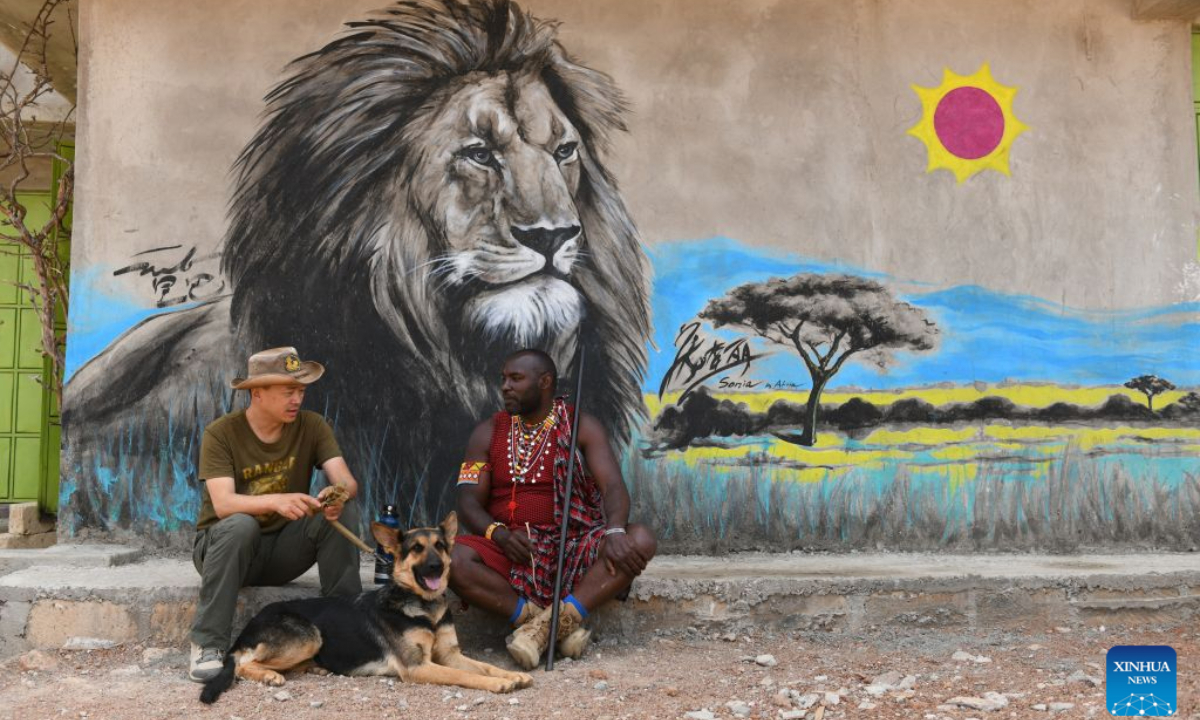
Among them is Chinese conservationist Zhuo Qiang, nicknamed "Simba," the Swahili word for lion. For him, this early-morning routine is driven by a broader mission to achieve human-wildlife coexistence.
In 2010, Zhuo left his job in China at the age of 37 and embarked on a less-traveled path: pursuing wildlife conservation in Kenya.
Without professional training in wildlife conservation, he found himself in a territory then dominated by Western organizations and local practitioners.
But Zhuo decided to stay. "I wanted to prove that Chinese people could also do wildlife conservation," he said.
Initially, Zhuo saw conservation largely through the lens of wildlife science: working in the field, studying animals and collecting data.
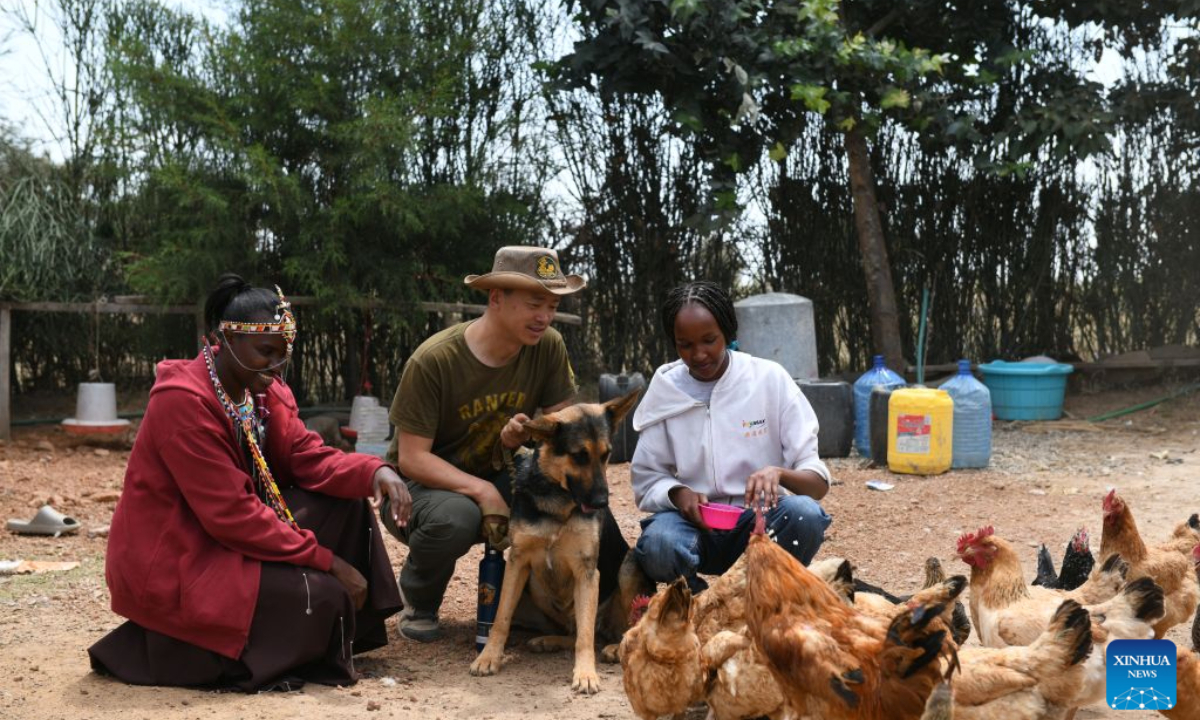
Living and working with Maasai communities changed that perspective. "The fate of wildlife was closely tied to the people sharing the same land," he said.
In the Maasai Mara ecosystem, livestock grazing is deeply connected to the livelihoods of pastoral communities. "If local people are asked to stop grazing but are given no alternative source of income, conservation cannot be sustainable," Zhuo said.
That principle laid the foundation for his work with the local community in establishing the Ol Kinyei Conservancy.
The area had suffered from prolonged overgrazing, with plants and the land itself deteriorating. Under the conservation model, local grazing land was leased and gradually restored, allowing vegetation to recover and creating a more suitable habitat for wildlife, said Zhuo.
Meanwhile, households participating in the scheme receive land-rental income and have access to jobs such as wildlife rangers and tourism workers. Their average annual income has increased from around 500 U.S. dollars to about 3,700 dollars, according to Zhuo.
Some residents from surrounding communities also learned from the experience and brought the approach back to their own grazing areas.
Nowadays, 26 private conservancies have been established around the Maasai Mara National Reserve, covering about 1,600 square km, according to Zhuo.
He believes the network of community conservancies provides additional safe space for wildlife to move and survive, extending conservation efforts beyond the boundaries of a single national reserve and into surrounding communities.
Simon Msago, a Maasai community leader in Ngoswani, said Zhuo's work encouraged more residents to take an active role in conservation.
In the past, many residents saw few direct benefits from wildlife conservation and had limited awareness of its importance. Today, community members are increasingly willing to work as rangers and protect wildlife, creating an effective layer of protection around the conservancies, Msago said.
"Human-wildlife conflict cannot be solved simply through restrictions and prohibitions. The key is to create alternative sources of income so that residents can gain tangible benefits from conservation," Zhuo said.
"That is what makes community-based conservation sustainable -- allowing local people to become part of wildlife conservation rather than bystanders with no stake in it."
While continuing his work in the Maasai Mara, Zhuo has also sought to strengthen exchanges between China and Africa in wildlife conservation.
In recent years, he has visited more than 30 nature reserves and national parks in China, sharing his experiences of community-based conservation in Africa with Chinese counterparts.
"Conservation practices in China and Africa each have their own characteristics, and there is much that the two sides can learn from each other," he added.
。
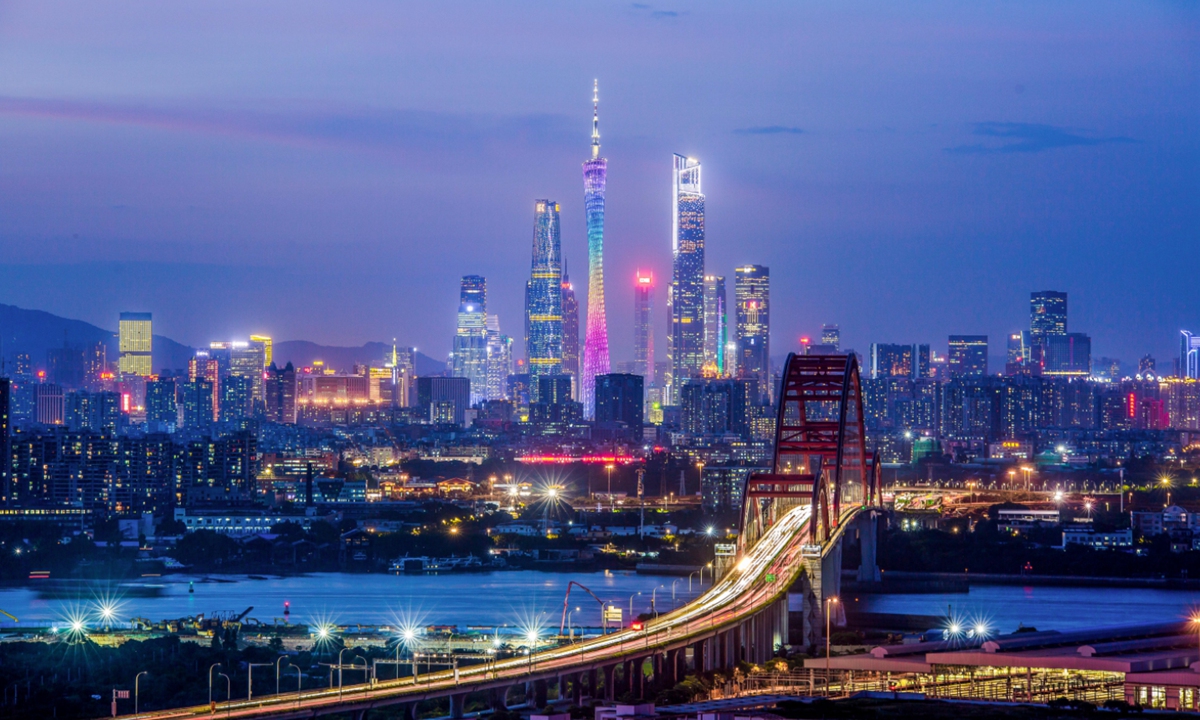
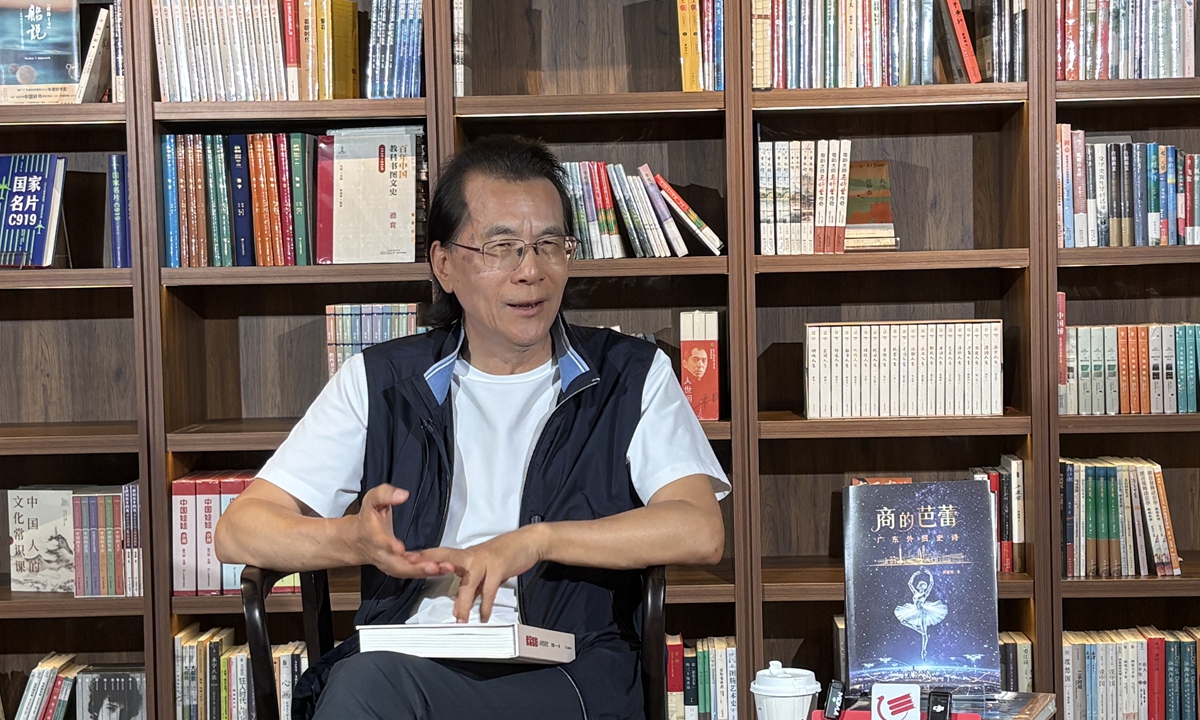
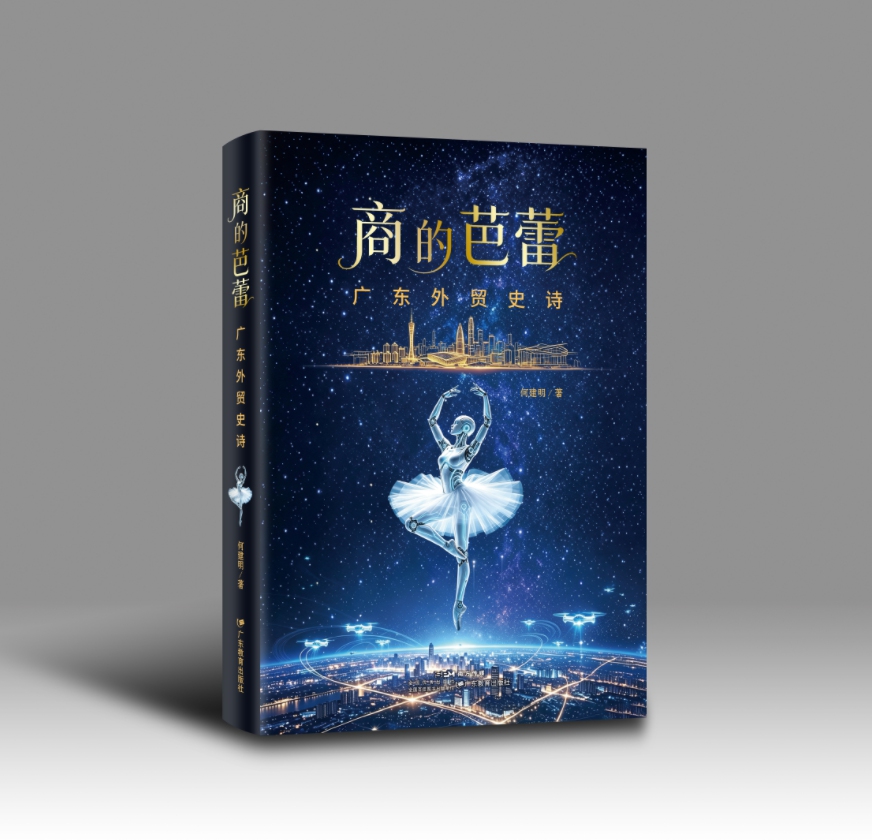
The monumental full length reportage Ballet of Commerce: The Epic of Guangdong's Foreign Trade by famous writer He Jianming is set to make its debut at the Southern China Book Fair from August 27 to 31 in Guangzhou, South China's Guangdong Province.
Published by the Guangdong Education Publishing House, the book is the first of its kind to offer a panoramic account of Guangdong's millennium of trade and will be presented as a special offering for 2026's APEC "China Year," Xu Xiaofeng, an editor with the publishing house, told the Global Times on Monday.
China will host the 33rd APEC Economic Leaders' Meeting in Shenzhen, Guangdong in November. It will be China's third time hosting the event, following Shanghai in 2001 and Beijing in 2014.
He, a former vice chairman of the China Writers Association and recipient of the Lifetime Achievement Award for Chinese Reportage Literature in 2023, told the Global Times on Monday that as the world watches the evolving trade relationship between China and the US, there is a growing need for a book that can help Western readers gain a deeper understanding of China's trading culture and how Chinese people have conducted business throughout history.
Guangdong marks the starting point of China's thousand-year maritime trade with the world. Through its foreign trade trajectory, the book reflects China's broader trade evolution, the enduring values of the Chinese spirit in the modern era, and the distinctive civilizational traits that have shaped China's rise, He noted.
Guangdong is both the birthplace of the ancient Maritime Silk Road and a pioneer of China's reform and opening-up. As a vital artery of commercial exchange between China and the rest of the world, the Maritime Silk Road has witnessed the evolution and transformation of the Chinese economy over the centuries.
During the Sui (581-618) and Tang (618-907) dynasties, silk was among the main goods transported along the route, earning it the name "Silk Road." During the Song (960-1279) and Yuan (1279-1368) dynasties, porcelain became a major export commodity, leading the route to be known as the "Porcelain Road." By the Ming (1368-1644) and Qing (1644-1911) dynasties, tea had emerged as a sought-after Chinese export in Europe, giving rise to yet another name - the "Tea Road," according to a report by the Counselor's Office of the Guangdong Provincial People's Government.
Mutual benefit
Guangdong, China's largest foreign trade province, accounts for about one-fifth of the country's total trade and imports. As a major manufacturing hub with deep and extensive industrial chains, it creates significant demand for production factors, the Xinhua News Agency reported.
In the first half of this year, Guangdong's foreign trade reached 5.49 trillion yuan ($810 billion), surpassing the 5-trillion-yuan mark for the first time in the same period on record. The figure represented a year-on-year increase of 20.8 percent and accounted for 21.6 percent of China's total foreign trade. The province contributed an additional 944.71 billion yuan in trade volume, accounting for 25.6 percent of the country's foreign trade growth, according to official statistics released in July.
Having interviewed over 100 enterprises and institutions, He said that the book revisits the enduring legacy of the Maritime Silk Road, highlighting the exchanges between China and the West and the fusion of diverse civilizations.
"At the heart of Chinese business culture is the belief that 'harmony is the most valuable.' Rooted in traditional Chinese culture, this philosophy emphasizes cooperation and mutual benefit. Rather than viewing strength as a means to overpower others, Chinese merchants have traditionally embraced the idea that prosperity should be shared. When one grows stronger, others can benefit and achieve success together. This aspect of Chinese commercial culture remains unfamiliar to many in the Western world," said the 70-year-old writer.
Wang Yuanlin, a professor at the School of Humanities Guangzhou University, told the Nanfang Plus (a Guangdong-based news platform) that mutually beneficial and fair foreign trade policies, together with Guangdong merchants' long-standing tradition of integrity and win-win cooperation, have been key factors behind the province's enduring success in foreign trade.
Elegant business
The author said that the choice of "ballet" in the book's title reflects the idea that Chinese business practices have developed into an art form - one characterized by balance and elegance.
"I want the Western world to understand that when the Industrial Revolution was just beginning and the Renaissance was sweeping across Europe, Chinese people had already mastered the art of commerce," He said.
Through conversations with entrepreneurs ranging from grassroots business founders to prominent corporate leaders such as Dong Mingzhu, chairperson of Gree Electric Appliances, He chronicles Guangdong's transformation from a millennia-old trading hub into a global industrial powerhouse.
"Just imagine: Employees at a private company can step into a space capsule after lunch and take a nap in their own private sleeping quarters. With a company like that, how could it not succeed?" he said.
From the exchange of handcrafted goods in the agricultural era to today's trade in high-tech products such as semiconductors and drones, Chinese people have developed a business culture centered on the principle that "harmony is most valuable" over thousands of years of commercial exchange.
This cultural tradition has become a key in driving the continued growth of trade in Guangdong and across China, He added.
。
Current article:http://cuozubeishenjingli.cfd/news/20260826_81112.html
Published on:15:33:49
我的网站相关内容
 县市场监督管理局:跨区域执法督查药品安全
 山姆入冀,品质零售迎来“新变量”
 “超级地球”或六光年以外的生命
 让小小五味子造福更多村民
 【观点】申银万国:供强需弱拖累,生猪短期延续调整
 韩国政府:将尽快制定“供应链基本法”_相关_企业
- ·China turns ancient TCM wisdom into high-tech personalized skincare
- ·Iranian FM condemns Biden's remarks on recent protests in Tehran
- ·部分地区大暴雨!天津最新预警!
- ·重磅!今晚美国公布8月通胀报告,预计8.5%降至8%,延续降温趋势_预期_物价
- ·Can US afford cost of clean-energy protectionism in race for AI capabilities?
- ·Nigerian content creator helps Chinese farm machinery reach overseas markets
- ·Twin AI satellites fast-track China's global space partnerships
- ·New book chronicles Guangdong’s millennium of trade, tracing China’s commercial spirit
我的网站最新内容
- ·Must help each other during crisis: PM to global community
- ·雷军的99亿股权激励用途是公开的:全部用于慈善事业
- ·截至2025年末 厦门执业(助理)医师达20642人
- ·경찰, A 경장·장미란 씨 접점 여부 수사 중
- ·Czech government survives no-confidence vote in Parliament sought by populist ex-PM
- ·Yellow peaches from east China debut in Serbia
- ·年轻人欢迎来到季后赛!库里巴特勒收学费 火箭两大短板超巨+经验
- ·美国国防部长:如有必要还会军事打击伊朗,但眼下看经济施压对伊伤害最大,美国有足够多的武器
- ·中央气象台:今晚到明晚,内蒙古、黑龙江、吉林、辽宁、山东、湖北、湖南、江西、浙江、福建、广西、海南岛等地有雷暴大风或冰雹天气
- ·公安机关“夏季行动”“平安护航”专项行动取得阶段性成效
- ·Smriti Mandhana issues first statement on weeks of wedding speculation with Palash Muchhal
- ·HTC没有遗憾。
- ·英女王伊丽莎白二世灵柩将被运回伦敦_英国国王穿苏格兰裙为女王守夜_王岐山前往英国驻华使馆吊唁英女王
- ·Fire partially collapses parking structure at London's Luton Airport
- ·云南省科学技术协会原党组书记、常务副主席张泽军被双开_违规_严重
- ·董明珠:谁说格力手机不成功?
我的网站热点内容
- ·帕金斯:杰伦-格林必须站出来证明自己 不然他就得拿来交易杜兰特
- ·Chinese experts dismiss hype of border issue, call for China, India to prevent it from hijacking bilateral ties
- ·Giant panda Jia Jia celebrates 14th birthday at Shanghai wildlife park
- ·경북교육청, 2027년도 공간재구조화사업 대상학교 선정 추진
- ·[포토] 남중국해 섬, 中 군사 시설 가능성
- ·美官员称特朗普已将美沙核协议提交国会审议
- ·公示!“闽超”拟新增2名台胞球员
- ·Stranger Things 5: Release Date, Cast, Plot & Where to Watch
- ·New Mexico governor defends approach to attempted gun restrictions, emergency order on gun violence
- ·Xi urges China, Ecuador to strengthen alignment of devt strategies in meeting with Noboa
- ·“带电赶考”成功 杭州地铁9号线二期顺利完成全线热滑试验
- ·TA:库什纳必须转让热火5%股权 方可收购湖人
- ·从新手到高频:一文读懂十大头部期货公司的差异化定位【期货公司选择】
- ·Real investment in what people need: what "investing in people" means
- ·【现货】8月26日各地区纸浆现货价格汇总:山东针叶浆(银星)报价4880元/吨
- ·逛西溪“三馆” 画水浒故事 20余名小画家沉浸式解锁“西溪水浒密码”