
王子变青蛙
NZ’s push for joint statement on China missile test falls flat amid growing Pacific Islands autonomy_我的网站

A |
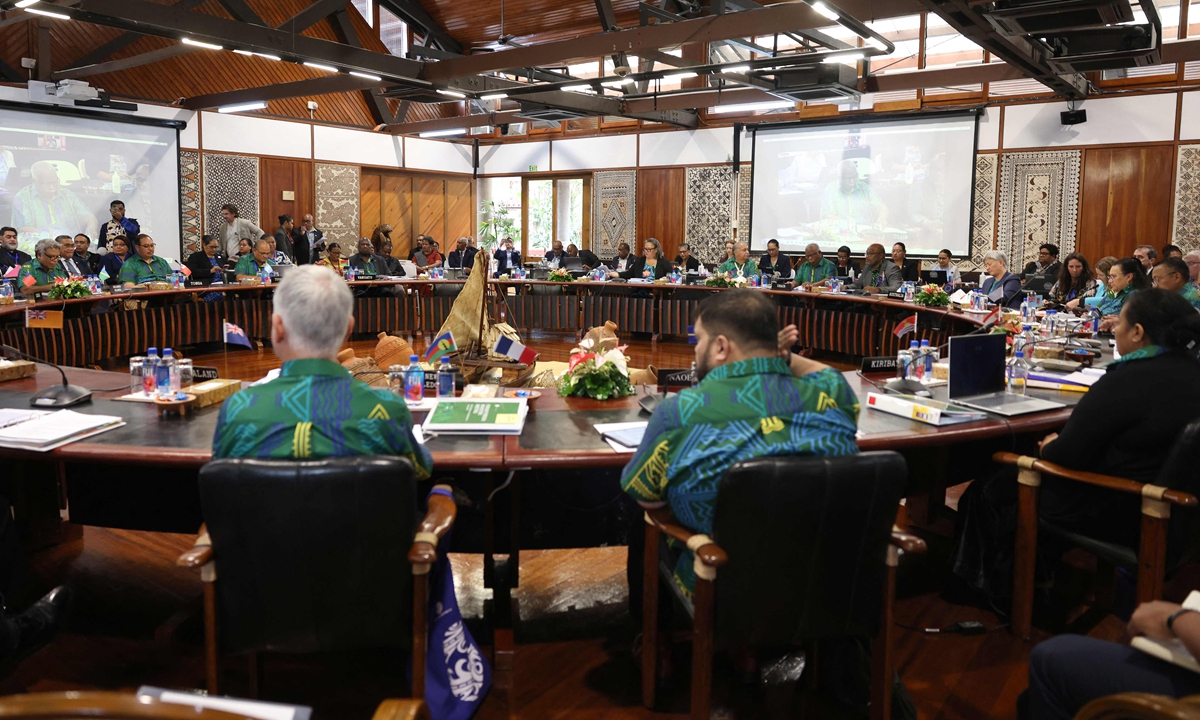
As foreign ministers and senior representatives from Pacific nations convened in Suva for the Pacific Islands Forum (PIF) to discuss key regional issues, New Zealand's foreign minister reportedly pushed to secure a joint statement condemning China's missile tests in July, however, his effort ultimately fell flat. A Chinese expert described the outcome as a clear rebuke to Canberra and Wellington's ingrained habit of speaking for the Pacific, saying the two countries must come to terms with a shifting reality: Pacific Island states are increasingly unwilling to let Australia and New Zealand dictate who their friends, foes and perceived security threats should be.
Pacific Island foreign ministers failed to agree on Friday to a joint response to China's missile launch in July, with further discussions expected at the Pacific leaders meeting at the end of August, said New Zealand Foreign Minister Winston Peters, according to Reuters.
According to a report from Radio New Zealand, there has not been a unanimous statement from Pacific nations about China's test-launch in July, and Peters said New Zealand had been pushing for one. Peters claimed that the Pacific missed an opportunity not to issue a joint statement soon after China's launch.
Australia's Foreign Minister Penny Wong said before the meeting that she hoped China took note of the "very clear response" already sent from the Pacific about the test, according to AFP.
Peters' push for a joint PIF statement on China's missile tests, together with Wong's remarks, are less about technical security concerns than an effort to turn their own anxieties about China into a regional agenda and pressure Beijing under the forum's collective banner. His description of Pacific Island countries' refusal to single out China as a "missed opportunity" also reveals little respect for their independent judgment, Chen Hong, director of the New Zealand Studies Centre, East China Normal University, told the Global Times.
The result is a clear rebuke to Canberra and Wellington's long-standing habit of arrogantly "speaking for" the Pacific, as island states are increasingly unwilling to let Australia and New Zealand decide who their friends, foes or security threats should be, said Chen Hong.
The Chinese People's Liberation Army Navy said on July 6 that one of its strategic nuclear submarines successfully launched a strategic missile toward relevant high seas of the Pacific Ocean, which landed precisely within the designated waters. China notified relevant countries in advance of the test launch, a move that demonstrates the openness and transparency of the Chinese armed forces, Chen Xi, a spokesperson for the Ministry of National Defense, said at a press conference on July 7.
Chen Hong also noted that Peters' recent China-related rhetoric has become increasingly populist and hawkish as elections approach in New Zealand. "Such an approach risks undermining New Zealand's long-standing reputation for pragmatic, independent, and rational diplomacy," Chen Hong said.
In July, during a parliamentary debate on New Zealand's Covid-19 pandemic response, Peters, who is also leader of the populist New Zealand First party, told a Chinese-born lawmaker to "go back to your own country" while mocking his English proficiency. His remarks drew wide criticism in New Zealand.
Yet Australia and New Zealand continued to amplify missile-related issues and great-power rivalry, pushing the "China threat" narrative to the center of the regional agenda while sidelining the priorities that matter most to Pacific Island nations, said Chinese analysts.
Chen Hong noted that for island states, the most urgent concerns are not geopolitical competition but everyday challenges: climate change, energy security, development financing, infrastructure and economic resilience. By shifting the focus from these concerns to strategic rivalry among major powers, Australia and New Zealand risk distorting the region's real priorities and undermining the aspirations of Pacific Island countries.
According to an introduction on the forum website, "The Forum's Pacific Vision is for a resilient region of peace, harmony, security, social inclusion and prosperity, so that all Pacific people can lead free, healthy, and productive lives."
At the opening of the meeting, Rick Houenipwela, foreign minister of the Solomon Islands and chair of the meeting, said that the Pacific's agenda must continue to be "conceived by the Pacific, shaped by the Pacific and only by the Pacific," according to Reuters.
Chen Hong said Pacific Island nations have made their position clear: differences with China do not mean signing up to the strategic agendas of Australia and New Zealand. A growing number of island countries refuse to be trapped in the black-and-white binary choice of siding with either China or the West.
If Canberra and Wellington keep pushing rhetoric beyond the regional consensus, they risk undermining the very institution they claim to support. The PIF's strength lies not in issuing confrontational statements, but in preserving Pacific unity. Turning that consensus into a tool for pressuring China would erode the forum's cohesion and weaken its central role in the region, said Chen Hong.
。

B | 中新网8月23日电 (记者 李柏涛 徐峻杰 实习生 胡叶羽)“我把这次的参赛经历,看作自己的一张‘名片’。

C | ”21日,第十一届京台青年创新创业大赛决赛暨颁奖典礼在北京圆满落幕。上届大赛斩获冠军的台青连唯证在分享自己的参赛经历时感慨道,“它不仅仅是一场比赛,更是一个连接两岸创业青年、产业资源、投资机构和市场机会的平台。” 如今,已然成为企业负责人的连唯证,带领公司实现营收突破1亿元人民币。 本届大赛以“青听两岸 创响京台”为主题,共吸引240余个优质项目踊跃报名,经过层层遴选,最终20个项目突围晋级决赛。 8月21日,第十一届京台青年创新创业大赛决赛暨颁奖典礼在北京圆满落幕。主办方供图 自2016年创办至今,京台青年创新创业大赛持续搭建两岸交流平台。越来越多台湾优质科创企业主动站上京台交流舞台,从容亮出台湾青年的创业“名片”。 “大陆最吸引台湾创业者的一点,就是它拥有庞大的内需市场。我们两岸同根同源,日常相处、市场适配都自然而然。”台湾创业者高睿旸坦言。

D | 扎根大陆发展的高睿旸,早已在此安家立业,组建起温馨的两岸家庭。他以自身真实的创业奋斗历程,生动印证了台青在大陆逐梦前行的无限可能。 “台湾人到大陆只要脚踏实地,就一定能够闯出属于自己的一片天。我们先把路走通、把事做成,才能让更多台湾青年看到希望,勇敢扎根大陆、逐梦未来。”高睿旸如是说。

E | 一批又一批怀揣热忱的台湾创业者接踵而至,抢抓大陆发展机遇,冯亦泽便是其中一员。

F | 深耕碳排放管理与建筑工程领域的冯亦泽,始终看好大陆广阔的产业发展前景。“我会把台湾当作示范基地,技术成熟之后再将它带入大陆市场。” 多年来,京台青年创新创业大赛不仅为台湾青年落地发展搭建了优质平台,更架起两岸青年互通互融的连心桥。赛事设置的交流环节,为两岸创业者搭建互学互鉴的渠道,让大家在交流探讨中寻找合作契机。 参赛台湾青年连国筌对此感触颇深:“各行各业的创业者带着自己深耕许久的项目登台分享,我们当然会认真聆听他们的项目,积极地去和他们交流:他们的产业链有需求,我们可以去响应;我们有需求,也可以看看他们是否有合作意愿。” 多年在京创业、往返两岸深耕,连唯证亲身见证了北京澎湃的创新活力与飞速的发展速度。他真诚呼吁广大台湾青年亲身来走一走,感知大陆的创业氛围。 “如果你已经有一个好的产品、有一个想实现的梦想,不要只停留在自己的舒适圈里,一定要勇敢走出来,去看看更大的市场。京台青年创新创业大赛,就是一个很好的起点。

G | ” 一张张跨越海峡的创业“名片”,串连起两岸青年敢闯敢试的逐梦之路。赛场落幕,但交流不会止步,来自海峡两岸的创业力量,将在这里继续碰撞。

H | (完) 【编辑:刘欢】。
Current article:http://cuozubeishenjingli.cfd/list_wkrxa9y/d4r3ts8.html
Published on:15:29:27
 京东物流与吉林国储物流签署合作协议 围绕应急物流保障等领域开展深度合作
 闲鱼三次变更处罚理由,永久封号,我要求撤销
 欧盟对AI的监管越来越像针对中国的关卡
 福州:三艘“船”绘就文旅新画卷
 优酷否认被今天的头条新闻所收买:一无所有
 市领导会见中国能源建设集团总承包公司党委书记、总经理胡义重一行
- ·绝杀巴林,中国男篮亚洲杯首胜
- ·杭州口岸2026暑运客流结构有较大变化 入境外籍旅客超27万人次同比增超12% 免签入境外籍旅客超16万人次同比增超20%
- ·鸟哈哈宠物售卖活体传染病鸟
- ·夏普受伤杨瀚森会获得更多机会?解说:两人位置不同 无直接竞争
- ·把公交预约机搬进小区 杭州公交这条线路解锁预约新模式
- ·India deeply concerned over escalation of Ukraine conflict: MEA
- ·两头“灰犀牛”来袭,350000亿美元蒸发?
- ·Exclusive: "He Never Increased His Fee Even After Any Blockbuster" - Subhash Ghai on Dharmendra
- ·IPO前商业模式遭质疑:Anthropic最强模型遇冷 中国实惠模型受青睐
- ·暴雪宣布与网易续签:魔兽世界和其他游戏操作权延长至2023年
- ·出産から半年→21歳の露フィギュア女子が公開した“4回転ルッツ完全着氷”に戦慄!「まじなのか…」「なんて美しい!」「4年後は金メダルだ」
- ·从“卖床”到“运营睡眠数据”:麒盛科技的软件叙事走到哪了
- ·Urumqi holds B2B matchmaking event for Uzbekistan export enterprises
- ·1-7月份辽宁省主要经济指标公布
- ·美媒评10大最难交易球员!特雷杨第1,乔治浓眉前三杰伦格林第5
- ·外交部:愿继续同联合国和世界各国一道,不断推动人工智能开放、包容、普惠、向善发展
- ·China takes overseas archaeology from Silk Road to South America
- ·Gamescom Awesome Indies 发布会:直播观看指南
- ·1—7月份,货物进出口总额301264亿元,同比增长17.3%
- ·Japanese yen touches 32-year low
- ·曼晚:多古喜欢看阿芳和特奥的比赛,力求提升自身进攻能力
- ·炒货机器人火候拿捏堪比老师傅
- ·【品格道口 全环境立德树人】中医家长智慧讲堂,传承国粹守护健康
- ·红米红米注7洞壳释放29元
- ·四川省人大常委会原委员、经济委员会原主任委员刘中伯被“双开”
- ·高温高湿环境下,如何办赛和参赛?官方指南来了!
- ·6 dead in Russian rocket strike as Ukraine reports record bomb attack numbers
- ·对冲基金经理:如果iPhone价格过高,苹果将继续面临困难。
- ·京东快递“开学寄”全面升级:小红箱、无人车齐上阵
- ·年轻人花50块买一张贴纸,图啥?
- ·华硕ROG XBOX掌机X 20周年版发布:首发7.4英寸星云原画屏、升级TMR摇杆
- ·真实命中率80%以上有多难?历史前10现役占一半,哈登92场仅排第4